Watercolor Tender Lilies Clipart: A Practical Guide for Designers and Crafters
For designers, scrapbookers, and independent creators, selecting the right visual assets is often the difference between a project that feels generic and one that resonates with personal style. Watercolor Tender Lilies Clipart has emerged as a specific category of digital art that bridges the gap between traditional botanical illustration and modern digital utility. Unlike rigid vector graphics or hyper-realistic photography, this style offers a softness and organic texture that is particularly effective for invitations, blog headers, and paper crafts. Understanding what makes these illustrations distinct, how they compare to other formats, and when they are the most appropriate choice requires a closer look at their technical specifications and aesthetic applications.
Defining the Aesthetic and Technical Specifications
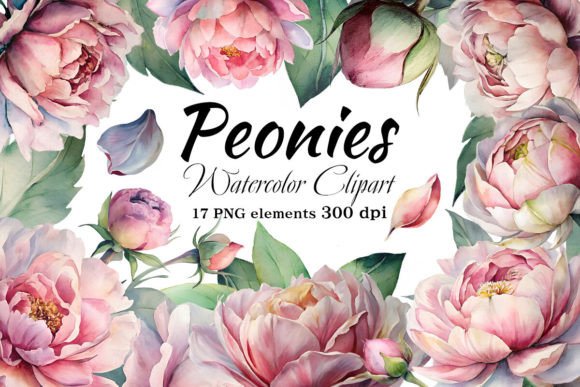
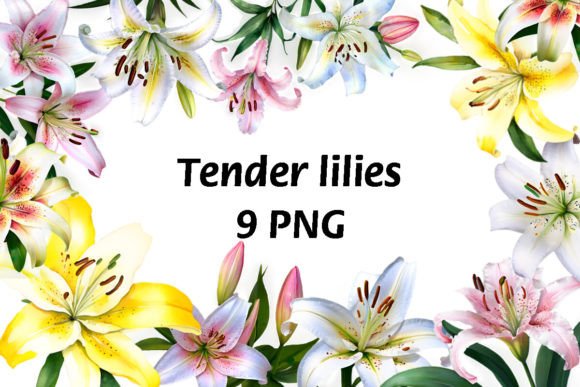
The term Watercolor Tender Lilies Clipart refers to a set of high-resolution digital images that mimic the fluid, translucent quality of traditional watercolor painting applied to lily flowers. The "tender" aspect usually implies a specific artistic approach: delicate brushstrokes, soft color gradients, and a lack of harsh outlines. This creates an ethereal, romantic, or vintage feel that is highly sought after in stationery and wedding design.
From a technical standpoint, these assets are typically delivered as PNG files. This format is crucial because it supports transparency, allowing the intricate, irregular edges of the watercolor blooms to blend seamlessly into various backgrounds without a white box surrounding them. A standard professional set, such as the one described in current market offerings, often includes approximately nine individual elements. These files are optimized for both screen and print, with dimensions reaching 3000 x 3000 pixels. At 300 dots per inch (DPI), this resolution equates to a physical print size of roughly 10x10 inches. This specification is significant; it ensures that when printed on paper, fabric, or cardstock, the image retains its clarity and does not appear pixelated or blurry.
Comparing Watercolor Styles to Vector and Photography
When evaluating resources for a design project, it is essential to compare Watercolor Tender Lilies Clipart against other common graphic formats. Each option serves a different purpose and carries its own set of tradeoffs.
Watercolor vs. Vector Graphics
Vector graphics are defined by mathematical paths, making them infinitely scalable without loss of quality. They are ideal for logos, bold typography, and designs requiring sharp, clean lines. However, vectors often struggle to replicate the organic randomness of paint bleeding into paper. If a project requires a hand-painted, artisanal feel, a vector flower may look too perfect or artificial. In contrast, watercolor clipart captures the imperfections and fluidity of real paint. The tradeoff is scalability; while a 3000-pixel image is sufficient for most posters and invitations, it cannot be enlarged indefinitely like a vector file without degrading in quality. Therefore, if you need a logo that must be resized from a business card to a billboard, a vector is the superior choice. For a wedding invitation or a blog banner, however, the textural depth of watercolor is often more effective.
Watercolor vs. Stock Photography
Photography provides realism but can sometimes dominate a layout. A photo of a lily contains complex lighting, shadows, and background details that can clash with text or other design elements unless heavily edited. Watercolor Tender Lilies Clipart offers a stylized abstraction. Because the background is transparent and the colors are controlled, these images integrate much more easily into mixed-media projects, such as scrapbooking or decoupage. They provide the subject matter of a photograph—the beauty of the lily—without the visual noise, allowing the designer to maintain control over the overall composition.
Evaluating Use Cases and Project Fit
The versatility of high-resolution watercolor lilies makes them suitable for a wide range of applications, but their effectiveness depends on the specific medium and intended audience.
Digital Applications: Blogs and Social Media
In digital environments, these cliparts excel in creating visual hierarchy. A tender lily illustration placed above a quote on a blog post can soften the tone of the content, making it feel more intimate and curated. For social media graphics, the PNG format allows these flowers to overlay text or photos without obstruction. They are particularly well-suited for lifestyle blogs, floral-themed websites, and digital planners where a cohesive, gentle aesthetic is required. The high resolution ensures they look crisp on Retina displays and high-density mobile screens.
Physical Crafts and Print Media
For those engaged in physical crafting, the 300 DPI resolution is a critical factor. Whether producing custom invitations, postcards, or magazine layouts, the ability to print at 10x10 inches without quality loss opens up substantial creative possibilities. These images are frequently used in:
- Scrapbooking: Layering transparent watercolor flowers over journaling cards adds depth.
- Decoupage: Printing on tissue paper or specialty stock to decorate boxes and furniture.
- Fabric Printing: Creating custom patterns for tote bags, pillows, or clothing, provided the resolution is maintained during the printing process.
- Stationery: Designing personalized envelopes, greeting cards, and book covers.
Decision Factors: When to Choose This Format
Selecting Watercolor Tender Lilies Clipart should be a deliberate decision based on project requirements. It is the right choice when:
- Softness is a priority: The design goal involves conveying romance, nostalgia, or tranquility.
- Transparency is needed: You require images that can sit atop complex backgrounds without needing masking tools.
- Print quality matters: The output will be physical, and the 300 DPI standard is necessary for professional results.
- Speed and convenience are factors: As a digital download, these assets offer immediate access. There is no shipping delay, allowing for rapid prototyping and production.
However, there are scenarios where this format may not be the best fit. If your project requires extreme scalability beyond 10x10 inches, a vector alternative would be safer. Additionally, if the brand identity relies on bold, high-contrast, or minimalist geometric shapes, the organic nature of watercolor might feel out of place. It is also important to note that these are digital products only; no physical goods are shipped. Creators must have access to a printer or a print-on-demand service to utilize the files physically.
Practical Considerations for Integration
When incorporating these graphics into a workflow, consider the color palette and layering techniques. Watercolor illustrations often rely on subtle variations in hue. To maintain the integrity of the "tender" look, avoid placing them against equally busy or chaotic backgrounds. White or off-white space usually enhances the delicate nature of the petals. Furthermore, because the set typically includes individual elements rather than just a single composite image, designers have the flexibility to rearrange, resize, and rotate the flowers to create unique compositions. This modularity is a significant advantage over pre-made templates, offering greater creative freedom while maintaining a consistent artistic style.
Ultimately, Watercolor Tender Lilies Clipart represents a balance between artistic charm and functional utility. By understanding its resolution limits, stylistic strengths, and compatibility with various mediums, creators can make informed decisions that elevate their work. Whether for a digital blog header or a printed wedding invitation, these high-quality PNGs provide a reliable resource for adding a touch of natural elegance to any project.