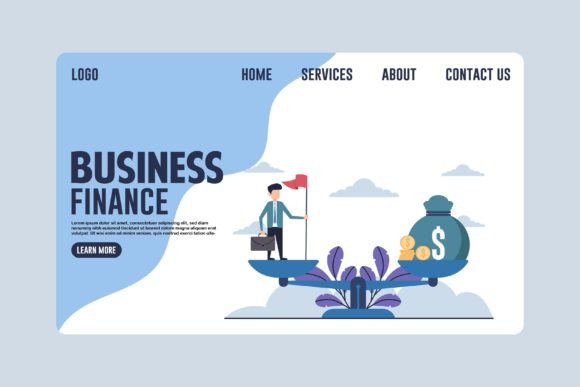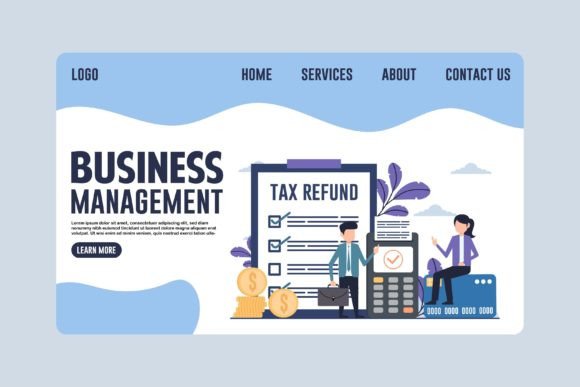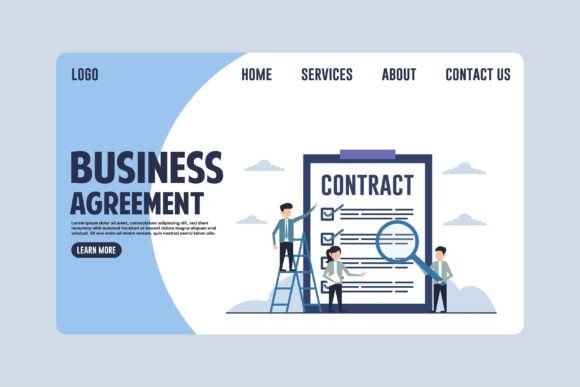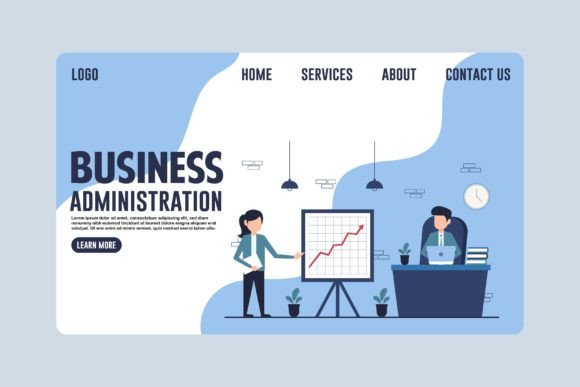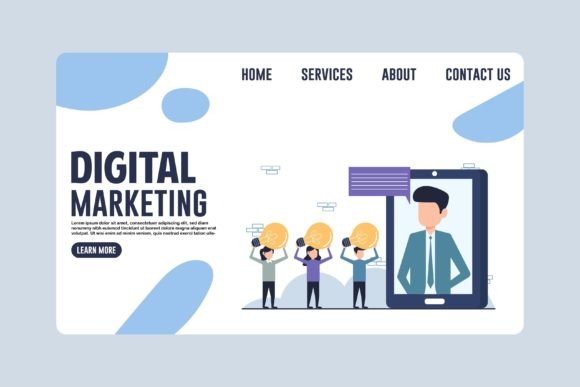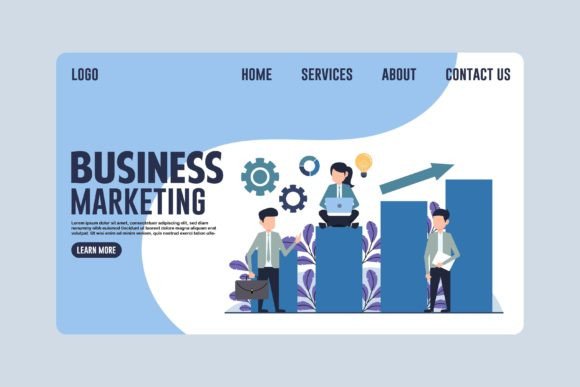
Understanding Landing Page Business Marketing Design for Professional Projects
In the crowded digital landscape, the effectiveness of a marketing campaign often hinges on the visual clarity and structural integrity of its entry point. Landing Page Business Marketing Design serves as the critical interface where potential customers first engage with a brand's message. Unlike standard website pages that prioritize navigation and exploration, a landing page is engineered with a singular focus: conversion. Whether the goal is to capture an email address, sell a product, or promote a webinar, the design must guide the user seamlessly toward a specific action without distraction.
The distinction between a generic web graphic and a purpose-built Landing Page Business Marketing Design lies in its intent and adaptability. Modern business environments demand assets that are not only visually striking but also technically versatile. This is where the shift toward fully vector-based resources becomes significant. When evaluating design resources, professionals must consider how easily an asset can be modified to fit unique branding guidelines, varied screen sizes, and evolving campaign strategies.
The Distinctive Nature of Vector-Based Marketing Assets
A primary characteristic of high-quality Landing Page Business Marketing Design today is its reliance on vector graphics. Unlike raster images, which are composed of fixed pixels and lose quality when enlarged, vector files are mathematically defined. This fundamental difference offers substantial advantages for designers and marketers who require flexibility. In a vector format, every element—shapes, lines, text, and icons—remains crisp and clear regardless of the scale.
This scalability is essential for modern multi-channel campaigns. A single design concept may need to appear as a massive billboard, a desktop hero image, a mobile app splash screen, or a small social media banner. With traditional raster images, resizing often results in pixelation or blurriness, forcing designers to create multiple versions of the same asset. However, with Landing Page Business Marketing Design templates built entirely on vectors, the transformation process is fluid. You can scale elements up or down, transform shapes, and adjust layouts without any loss of quality.
Furthermore, the editability of vector files empowers teams to customize assets rapidly. In a fast-paced marketing environment, brand colors might change, or a headline might need rewording based on real-time data. Vector formats allow users to recolor elements, add or remove specific components, and modify text directly within vector graphics software. This level of control ensures that the final output aligns perfectly with current brand standards while maintaining professional fidelity.
Comparing Vector Templates Against Raster Alternatives
When choosing resources for a project, it is helpful to compare vector-based templates against their raster counterparts. Raster images, such as JPEGs or PNGs, are excellent for complex photography and detailed textures. They are widely supported and easy to preview. However, they lack the structural flexibility required for dynamic marketing materials. If a marketer needs to change the background color of a hero image or extend a geometric shape to fit a new layout, a raster file often requires starting from scratch or using complex masking techniques that degrade over time.
In contrast, Landing Page Business Marketing Design solutions provided in vector formats offer a modular approach. Imagine a scenario where a company needs to launch a campaign across three different regions, each requiring a slightly different color scheme and localized text. With a vector template, these changes can be made in minutes by adjusting the fill properties and text layers. With a raster alternative, this would likely involve recreating the entire composition or hiring a designer for each variation, significantly increasing costs and time-to-market.
Another key comparison involves file longevity. As display technologies evolve, resolution requirements increase. A raster image created five years ago may look acceptable on a standard monitor but could appear blurry on today's high-density Retina displays. Vector files do not suffer from this obsolescence. Because they are resolution-independent, a Landing Page Business Marketing Design created today will render perfectly on screens of the future, protecting the investment in creative assets.
Evaluating File Formats and Deliverables
For professionals sourcing design resources, understanding the included file formats is crucial for workflow efficiency. A comprehensive package for Landing Page Business Marketing Design typically includes source files in EPS (Encapsulated PostScript) format. EPS is a robust industry standard that preserves all vector data, ensuring compatibility with major design software like Adobe Illustrator, CorelDRAW, and Inkscape. This allows designers to access every layer, path, and effect embedded in the original creation.
While source files are vital for editing, immediate usability is also important. Many templates now include high-resolution JPG previews alongside the vector sources. These rasterized versions serve two purposes: they provide a quick way to visualize the design without opening heavy vector software, and they can be used immediately for low-stakes applications where editing is not required. However, for serious implementation in web graphics, mobile web interfaces, or large-scale infographics, the EPS source files remain the superior choice due to their infinite scalability and editability.
Best-Fit Situations for Vector Landing Page Designs
Determining when to utilize a vector-based Landing Page Business Marketing Design depends on the specific goals of the project. These templates are particularly well-suited for scenarios requiring frequent iteration. Startups and agile marketing teams often test multiple variations of headlines, calls-to-action, and visual themes. The ability to quickly recolor and rearrange elements makes vector templates an ideal foundation for A/B testing campaigns.
They are also the preferred choice for projects involving diverse output mediums. If a single campaign strategy requires assets for a website hero section, a mobile app landing page, a printed brochure, and a trade show banner, vector designs ensure consistency across all touchpoints. The uniformity of line weights and typography remains intact whether the design is viewed on a 4-inch smartphone screen or a 4-foot print poster.
Additionally, businesses with strict brand guidelines benefit immensely from these resources. Corporate identities often dictate precise Pantone colors and specific logo usage rules. Vector files allow for exact color matching and the seamless integration of custom logos without the risk of compression artifacts or misalignment that can occur with flattened raster images.
Tradeoffs and Limitations to Consider
Despite their versatility, vector-based Landing Page Business Marketing Design options are not a universal solution for every visual need. One notable limitation is their suitability for photorealistic imagery. While vectors excel at illustrations, icons, typography, and geometric patterns, they cannot replicate the nuanced depth and texture of a photograph. If a campaign relies heavily on lifestyle photography or complex organic textures, a vector template may feel too sterile or artificial unless combined with raster elements.
Another consideration is the technical barrier to entry. To fully leverage the benefits of editable vector files, the user must have access to vector graphics software and possess a basic understanding of how to manipulate paths, anchors, and layers. For non-designers who simply need a static image for a blog post, the complexity of opening and saving an EPS file might be unnecessary overhead. In such cases, a pre-rendered high-resolution JPG might suffice, though it sacrifices long-term flexibility.
File size can also be a factor. While vector files are generally efficient for simple graphics, highly complex illustrations with thousands of anchor points can result in larger file sizes that may impact web load times if not optimized correctly. It is essential to clean up unused elements and simplify paths before deploying these assets on live websites to ensure optimal performance.
Making an Informed Decision for Your Project
When evaluating whether to invest in a comprehensive Landing Page Business Marketing Design package containing 100 vector source files, the decision should rest on the scope and longevity of your marketing efforts. If your organization plans to run sustained campaigns, requires consistent branding across multiple platforms, or anticipates the need for rapid customization, the vector approach offers a clear strategic advantage. The initial learning curve associated with handling EPS files is offset by the long-term savings in production time and the assurance of high-quality outputs.
Conversely, if the requirement is for a one-off, static image with no intention of future modification, a simpler raster solution might be more practical. However, for most professional contexts, the ability to transform, scale, and recolor without quality loss provides a safety net that raster images cannot match. By choosing a resource that prioritizes vector integrity, you ensure that your marketing materials remain adaptable, professional, and effective as your business evolves.
Ultimately, the right choice balances immediate needs with future possibilities. A robust set of vector assets provides the foundation for a flexible design system, enabling teams to produce high-impact visuals for web graphics, mobile interfaces, banners, hero images, and infographics with confidence and precision.