Transforming Web Design with High-Resolution Ecosystem Icons
In the rapidly evolving landscape of digital design, the visual language we use to communicate sustainability has never been more critical. As brands and organizations strive to demonstrate their commitment to the planet, the need for authentic, high-quality graphical assets has surged. This is where specialized Ecosystem Icons become an indispensable tool for designers, developers, and content creators. Welcome to a resource that bridges the gap between technical precision and ecological storytelling.
Whether you are building a corporate sustainability report, designing a landing page for a green energy startup, or creating educational materials for environmental NGOs, the quality of your imagery dictates the credibility of your message. The specific collection known as Hi, welcome to the store Vector icons of ecology and environmental protection for web design offers exactly what modern projects require: clarity, scalability, and professional polish.
The Power of Vector Graphics in Environmental Storytelling
When discussing digital assets, the distinction between raster and vector graphics is often overlooked by non-designers, yet it is the single most important factor in ensuring long-term usability. Raster images, composed of pixels, lose quality when enlarged. In contrast, vector graphics are defined by mathematical equations, allowing them to be scaled infinitely without any loss of resolution.
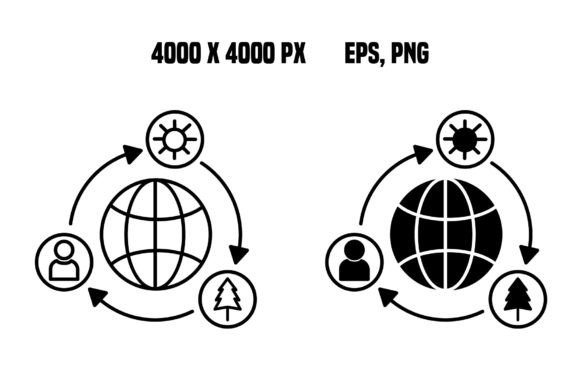
This characteristic makes Ecosystem Icons particularly valuable for web design. A website must look crisp on a tiny mobile screen and equally sharp on a massive 4K desktop monitor. With this specific ZIP file containing transparent image EPS and PNG formats, designers gain the flexibility to adapt their visuals to any context. The included high resolution of 300 dpi and dimensions of 4000 x 4000 pixels ensure that even when printed on large banners or displayed on high-density Retina displays, the details remain razor-sharp.
Consider the scenario of a nature conservation app. You might need a small icon for a navigation bar representing a forest, but later, you might need that same graphic blown up to fill a hero section on the homepage. If you were using a low-resolution JPEG, the result would be pixelated and unprofessional. However, with these vector-based elements, the transition is seamless, maintaining the integrity of the design across all devices.
Understanding the File Formats: EPS and PNG
The versatility of this package lies in its dual-format delivery. The inclusion of both EPS (Encapsulated PostScript) and PNG (Portable Network Graphics) files caters to different stages of the design workflow.
- EPS Files: These are the gold standard for professional editing. If you are working in Adobe Illustrator, CorelDRAW, or other vector software, the EPS format allows you to deconstruct the icons, change colors, adjust line weights, and modify shapes to perfectly match your brand guidelines. This is essential for customizing Ecosystem Icons to fit a unique corporate identity.
- PNG Files: For web developers who need to implement graphics immediately without opening heavy design software, the PNG files are ready to go. The transparency feature is crucial here, allowing these icons to sit beautifully over any background color or texture without an unsightly white box around them. This "plug-and-play" capability speeds up development cycles significantly.
Designing for the Modern Eco-Conscious User
The aesthetic of environmental protection has shifted away from clichéd green globes and generic leaves. Today's users expect designs that feel organic, clean, and sophisticated. The Vector icons of ecology and environmental protection included in this set reflect this modern sensibility. They are designed to be minimal yet expressive, conveying complex ideas about biodiversity, renewable energy, and waste reduction through simple, recognizable symbols.
Incorporating these icons into your project does more than just decorate a page; it builds trust. When a user visits a site dedicated to climate action, they subconsciously assess the professionalism of the presentation. High-quality visuals signal that the organization behind the site is serious, well-funded, and detail-oriented. Conversely, blurry or outdated clip art can undermine the very message of care and stewardship the site aims to promote.
Think about the practical application in a e-commerce setting. An online store selling sustainable products needs to highlight certifications like "Recyclable," "Biodegradable," or "Carbon Neutral." Using custom, high-res icons next to product descriptions creates a visual shorthand that informs customers instantly. It reduces cognitive load and enhances the shopping experience, potentially increasing conversion rates for eco-friendly goods.
Integration into Modern Workflows
For design teams operating in agile environments, efficiency is paramount. The structure of this download—a single ZIP file containing two distinct vector design elements—streamlines the asset management process. There is no need to hunt through multiple folders or subscribe to expensive stock photo sites for individual items.
Once downloaded, these assets can be integrated into various workflows:
- Web Development: Developers can link directly to the PNG files within their CSS or HTML structures, ensuring fast loading times due to the optimized file sizes typical of vector-derived PNGs.
- Marketing Campaigns: Marketing teams can utilize the EPS files to create social media graphics, email headers, and digital advertisements that maintain consistency with the main website.
- Print Collateral: Because of the 300 dpi resolution, these icons are not limited to screens. They can be used in brochures, business cards, and event signage, bridging the gap between digital and physical branding.
Key Considerations for Choosing Ecological Assets
Before adopting any new design element, it is wise to evaluate how it fits into your broader strategy. When selecting Ecosystem Icons, consider the following factors to ensure they serve your project effectively.
Scalability and Future-Proofing
Your project will likely evolve. A website launched today may undergo a redesign in two years, or a campaign may expand from digital-only to include print materials. Investing in high-resolution vector assets ensures that your initial investment remains valid. You won't need to re-purchase or re-create assets because the original files were too low-quality for a new requirement. The 4000 x 4000 pixel dimension provides a substantial buffer for future needs.
Brand Consistency
Ecology is a broad theme, but every brand has a unique voice. Some lean towards earthy, rustic tones, while others prefer sleek, futuristic tech-green aesthetics. The ability to edit the EPS files means you can tweak the stroke width or color palette of these icons to align perfectly with your brand book. This customization is vital for maintaining a cohesive visual identity across all touchpoints.
Accessibility and Clarity
Good design is inclusive. Environmental icons should be easily understood by a global audience, transcending language barriers. The designs in this collection prioritize clear silhouettes and distinct shapes, making them accessible to users with visual impairments or those viewing the site on older devices. Clear communication is the cornerstone of effective environmental advocacy.
Practical Applications Across Industries
The utility of these Vector icons of ecology and environmental protection extends far beyond niche environmental blogs. Almost every industry today is grappling with sustainability reporting and green initiatives.
Retail and Fashion: Brands are increasingly labeling their supply chains. Icons indicating "Organic Cotton" or "Ethically Sourced" are essential for transparency.
Tech and Software: Data centers consume massive amounts of energy. Tech companies use these icons to visualize their carbon footprint reduction goals and renewable energy usage.
Education: Teachers and instructional designers use high-quality visuals to engage students in lessons about climate change, recycling, and conservation.
Real Estate: Developers promoting LEED-certified buildings use these graphics to highlight features like solar panels, rainwater harvesting systems, and green roofs.
By integrating these assets, businesses can visually articulate their values without relying solely on text. In an era of information overload, a well-placed icon can convey a message faster and more memorably than a paragraph of copy.
Maximizing the Value of Your Download
Thank you for visiting the store and considering this resource for your next project. To get the most out of the Hi, welcome to the store Vector icons of ecology and environmental protection for web design ZIP file, take a moment to organize your assets properly. Create a dedicated folder for "Eco-Assets" and separate the editable EPS versions from the web-ready PNGs. This organization will save hours of frustration down the line.
Remember that the power of these Ecosystem Icons lies not just in their resolution, but in how they are deployed. Use them to guide the user's eye, break up dense text, and reinforce key messages. Whether you are a freelance designer juggling multiple clients or an in-house team managing a corporate rebrand, having reliable, high-quality vector elements at your disposal is a competitive advantage.
As the world becomes more environmentally aware, the demand for authentic, high-quality visual communication will only grow. By choosing tools that offer both technical excellence and aesthetic appeal, you are positioning your work to meet the standards of tomorrow's digital landscape. Let these icons be the foundation of your next great design, helping to tell the story of a greener future with clarity and impact.