Library Icons: Elevating Your Digital Architecture
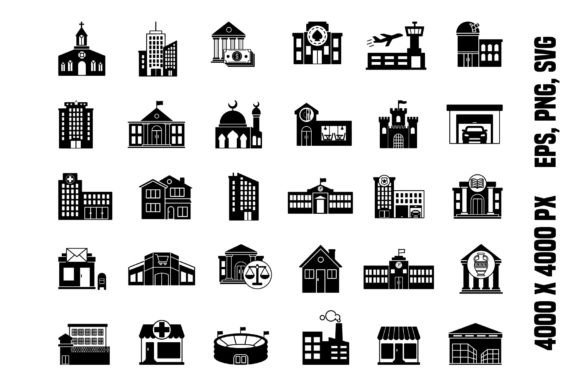
In the rapidly evolving landscape of digital design, the visual language of an application often dictates its perceived reliability and usability. For developers and designers building mobile apps or web platforms, the choice of imagery is not merely decorative; it is functional. This is where Library Icons become a critical asset. Specifically, the collection titled "Hi, welcome to the store Vector icons of buildings for mobile and web applications" offers a specialized solution for those needing high-quality architectural representations. These are not just simple clip art; they are robust vector design elements crafted to meet the rigorous demands of modern screen resolution and scalability.
The journey of creating a polished user interface often stalls when designers cannot find assets that balance aesthetic appeal with technical precision. Generic icon packs frequently lack the specific nuance required to represent educational institutions, government buildings, or corporate headquarters effectively. When a user navigates a map application, a property management portal, or an educational resource hub, they expect immediate visual recognition. A low-resolution or poorly designed building icon can create friction, slowing down the user's ability to understand their location or destination. The introduction of a dedicated set of Library Icons addresses this gap by providing clarity and consistency across various digital touchpoints.
The Challenge of Scalability and Resolution
One of the most persistent challenges in contemporary graphic design is maintaining image quality across diverse devices. From the small screens of older smartphones to the massive Retina displays of modern tablets and 4K desktop monitors, an icon must remain crisp at every size. Raster images, such as standard JPEGs or low-bit PNGs, often suffer from pixelation when scaled up, resulting in a blurry, unprofessional appearance that undermines the credibility of an application.
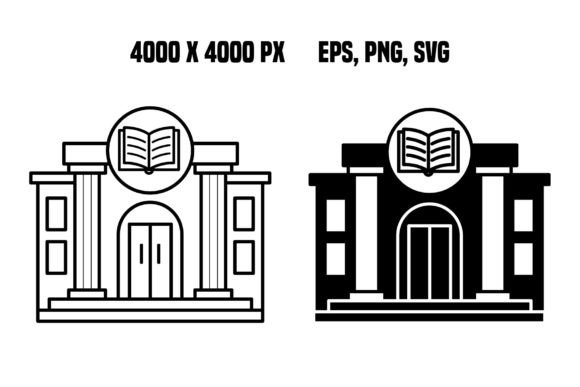
This is where the technical specifications of the provided vector pack become essential. With a high resolution of 300 dpi and dimensions reaching 4000 x 4000 pixels, these assets ensure that no matter how large the display, the details of the architecture remain sharp. Furthermore, the inclusion of vector formats like EPS and SVG allows for infinite scalability without any loss of quality. Unlike raster graphics, which are defined by a fixed grid of pixels, vector graphics use mathematical equations to define shapes. This means a Library Icon representing a grand library facade can be shrunk to fit a navigation bar or expanded to cover a full-screen hero section, all while retaining perfect edges and smooth curves.
Practical Applications in Mobile and Web Design
The versatility of these building icons opens up a wide array of practical applications. For mobile app developers, space is a premium commodity. Icons must communicate complex ideas instantly. A Library Icon used in a campus navigation app helps students quickly identify academic buildings amidst a cluttered map interface. Similarly, in real estate applications, distinct architectural icons allow users to differentiate between residential homes, commercial offices, and public institutions like libraries or museums at a glance.
Web developers also benefit significantly from these resources. In the context of responsive web design, images must load quickly and adapt to different viewport sizes. The transparent image options available in the ZIP file—specifically the PNG and SVG versions—integrate seamlessly into various background colors and textures. Whether a website features a dark mode theme or a vibrant, colorful layout, the transparency ensures that the icon blends naturally without the need for awkward white borders or masking effects.
Consider a scenario involving a city tourism portal. The goal is to guide visitors to cultural landmarks. Using a generic "building" icon fails to convey the specific nature of the destination. However, a detailed vector illustration of a library or historical structure immediately signals the type of experience awaiting the visitor. This specificity enhances the user experience by reducing cognitive load. Users do not have to guess what a symbol represents; the visual cue provides immediate context.
Technical Integration and Workflow Efficiency
For design teams, time is a valuable resource. Sourcing individual assets from multiple vendors can lead to inconsistencies in style, color palette, and line weight. The "Hi, welcome to the store" package consolidates these needs into a single, cohesive collection. The inclusion of multiple file formats within one ZIP file streamlines the workflow for both designers and developers.
Designers working in Adobe Illustrator or similar vector-based software can utilize the EPS files to edit paths, adjust colors, or modify structural details to match their brand guidelines. Meanwhile, frontend developers can drop the SVG files directly into HTML code, ensuring lightweight loading times and crisp rendering on all browsers. The SVG format is particularly advantageous for web performance, as it is text-based and can be optimized further through minification. This dual-format approach supports a collaborative environment where design intent is preserved throughout the development process.
Moreover, the high resolution of 4000 x 4000 pixels provides a safety net for print collateral. While the primary focus is digital, many organizations require matching branding materials for physical signage, brochures, or event banners. Having access to a source file that meets the 300 dpi standard for print ensures that the digital identity translates perfectly to the physical world, maintaining brand consistency across all media channels.
Tailoring Solutions for Different User Needs
Different stakeholders may approach the implementation of Library Icons based on their specific goals. A startup founder focused on rapid prototyping might prioritize the ease of integration offered by the PNG files, allowing them to mock up a functional interface in hours rather than days. Conversely, a senior UI/UX designer working on a flagship enterprise product will likely leverage the SVG and EPS files to create a custom, highly refined visual system that aligns with strict corporate branding standards.
Accessibility is another crucial consideration for modern developers. Clear, well-defined icons contribute to a more accessible web experience. Users with visual impairments who rely on screen readers or magnification tools benefit from high-contrast, scalable vector graphics that do not degrade when zoomed in. By choosing high-quality Library Icons, developers are inadvertently supporting inclusive design principles, ensuring that their applications are usable by the widest possible audience.
Strategic Considerations for Implementation
When integrating these building icons into a project, it is important to consider the broader context of the user interface. Consistency is key; mixing these vector icons with hand-drawn illustrations or low-fidelity sketches can create a disjointed visual experience. It is recommended to use the Library Icons as part of a unified icon set, applying consistent stroke weights and color palettes across the entire application.
Furthermore, the semantic value of the icons should be respected. A library icon should be used specifically for educational or archival contexts, rather than as a generic placeholder for any building. This precision helps build trust with the user, signaling that the application has been thoughtfully designed with attention to detail. As you explore the contents of the ZIP file, take the time to evaluate how each element fits into your specific narrative. Whether you are building a directory for local businesses, a navigation tool for university campuses, or a portfolio for architects, these vector design elements provide the foundational visuals needed to succeed.
Ultimately, the decision to invest in high-quality assets like the "Vector icons of buildings" collection is an investment in the longevity and professionalism of your digital product. In a crowded marketplace where first impressions are formed in milliseconds, the clarity and beauty of your visual elements can make the difference between a user staying and a user leaving. By leveraging the power of scalable vectors and high-resolution imagery, you ensure that your application stands out as a beacon of quality and reliability.